

Overview
I was running a dozen coding agents across four machines and spending my day checking on them. Polaris is the window I wanted instead.
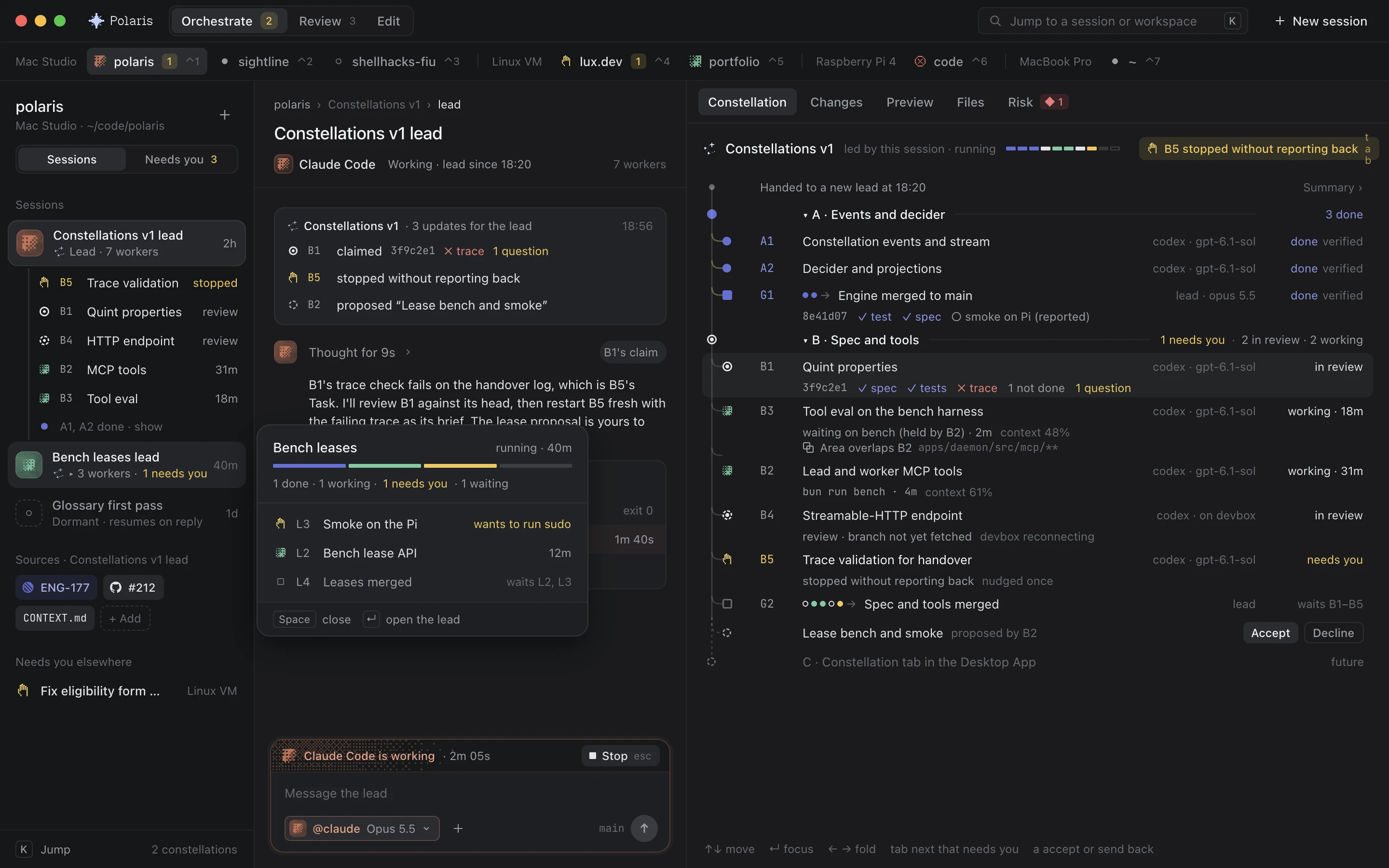
It runs Claude Code, Codex and OpenCode side by side, on your Mac or any machine you can reach over SSH. A small daemon on each machine keeps sessions alive when you close the lid. Polaris stays quiet while agents work, and asks for you only when one of them is stuck.
I designed it, built it, and made the brand. Most of the code was written by agents working in parallel, and every wave was security-reviewed before it merged.
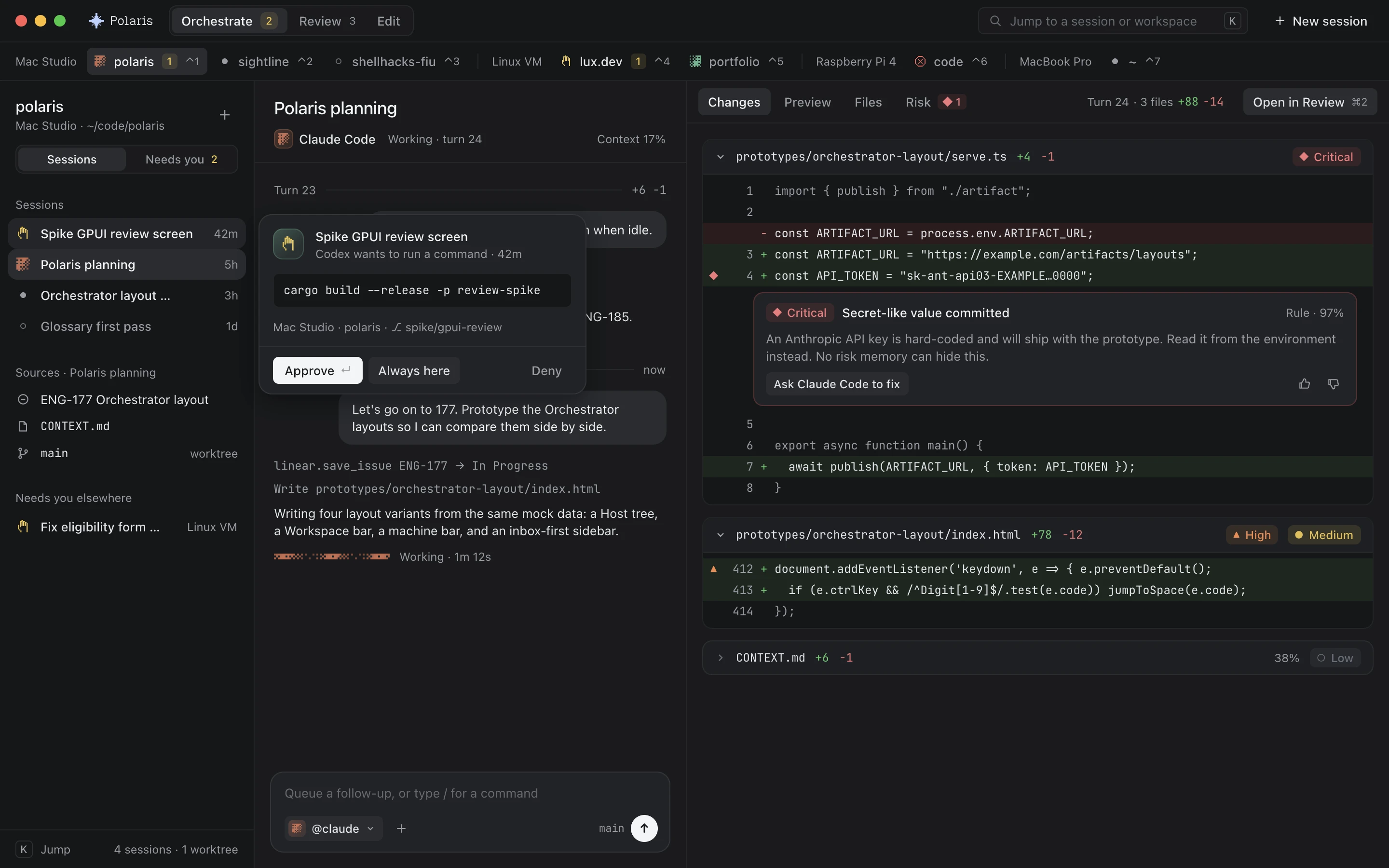
Four decisions
Polaris never installs your agents, and never touches your keys.
It drives the Claude Code, Codex or OpenCode you already have, signed in the way you already signed in. Nothing to migrate, nothing new to trust with a credential.
Only the stuck agent asks for you.
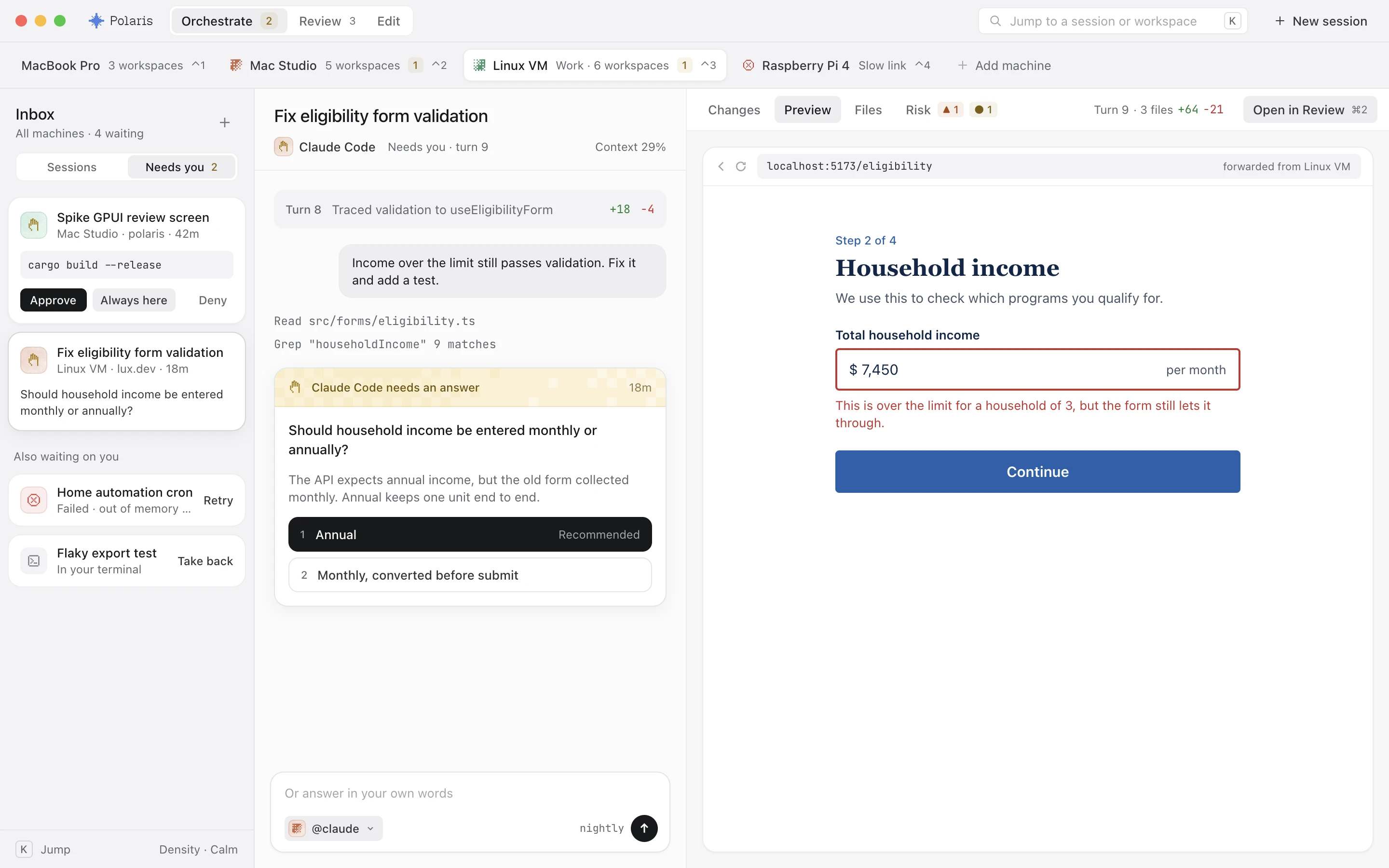
Agents can work for hours. Polaris keeps quiet until one needs a decision or wants to run a command, then puts it in a single inbox. Answer from the notification, or take over in the terminal and hand it back.
The reviewer works in its own checkout, with no network.
Every turn and pull request gets a risk summary, with the riskiest lines first. The reviewer reads a separate copy of the code in a sandbox, so it can't touch your working tree or reach the internet.
Language servers are pinned and checked, not installed on a whim.
The editor brings its own runtime and downloads exact releases of each language server, verified by checksum. The same project behaves the same on every machine.
Around the app
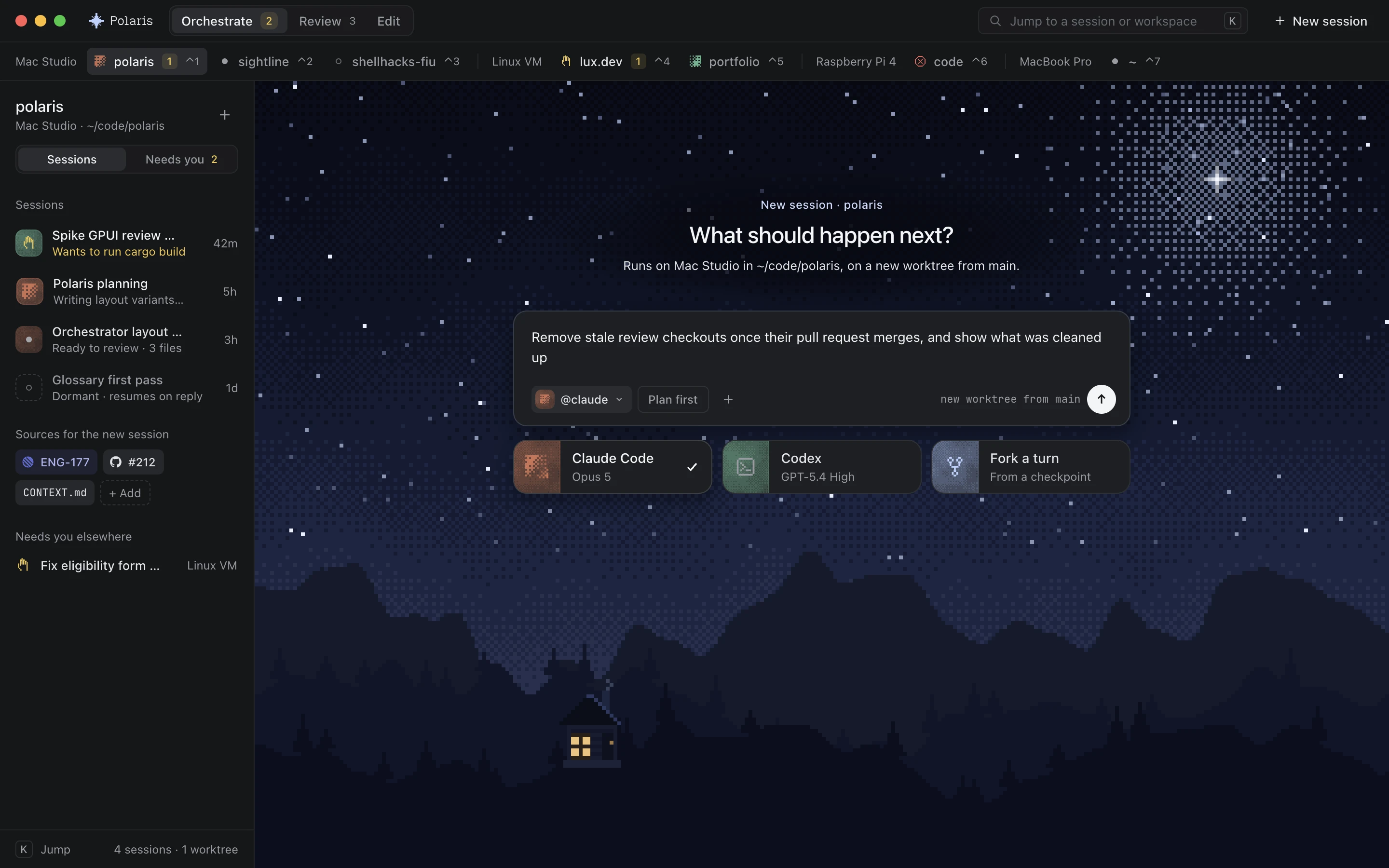
A pixel star drawn on whole pixels, a Geist Pixel wordmark, and a night sky wherever the app is empty.
How it was built
Each feature started as a grilling session and a written decision. Then a wave of agents built it in separate copies of the repo, and a security review closed every wave before anything merged.